
Different Tyre Tread Patterns: Which One Is Best for Your Driving Style?
Posted on November 24, 2025
When it comes to tyres, most drivers focus on brand, size, or price. But one of the most important factors—tyre tread pattern—is often overlooked. The tread design directly affects how your vehicle grips the road, handles corners, and performs in various weather conditions. Choosing the right tread pattern can significantly improve safety, comfort, and tyre lifespan.
In this guide, we break down the four main types of tyre tread patterns, explain their uses, and help you find the best option for your driving style.
What Is a Tyre Tread Pattern?
A tyre’s tread pattern is the arrangement of grooves, blocks, ribs, and channels on its surface. These patterns are engineered to provide:
- Traction on dry and wet surfaces
- Better braking and cornering stability
- Water evacuation to reduce aquaplaning
- Noise control and comfort
- Longer tyre life
Different designs are created for specific driving needs—highway, city, off-road, sporty driving, and more.
1. Symmetrical Tread Pattern
What It Looks Like
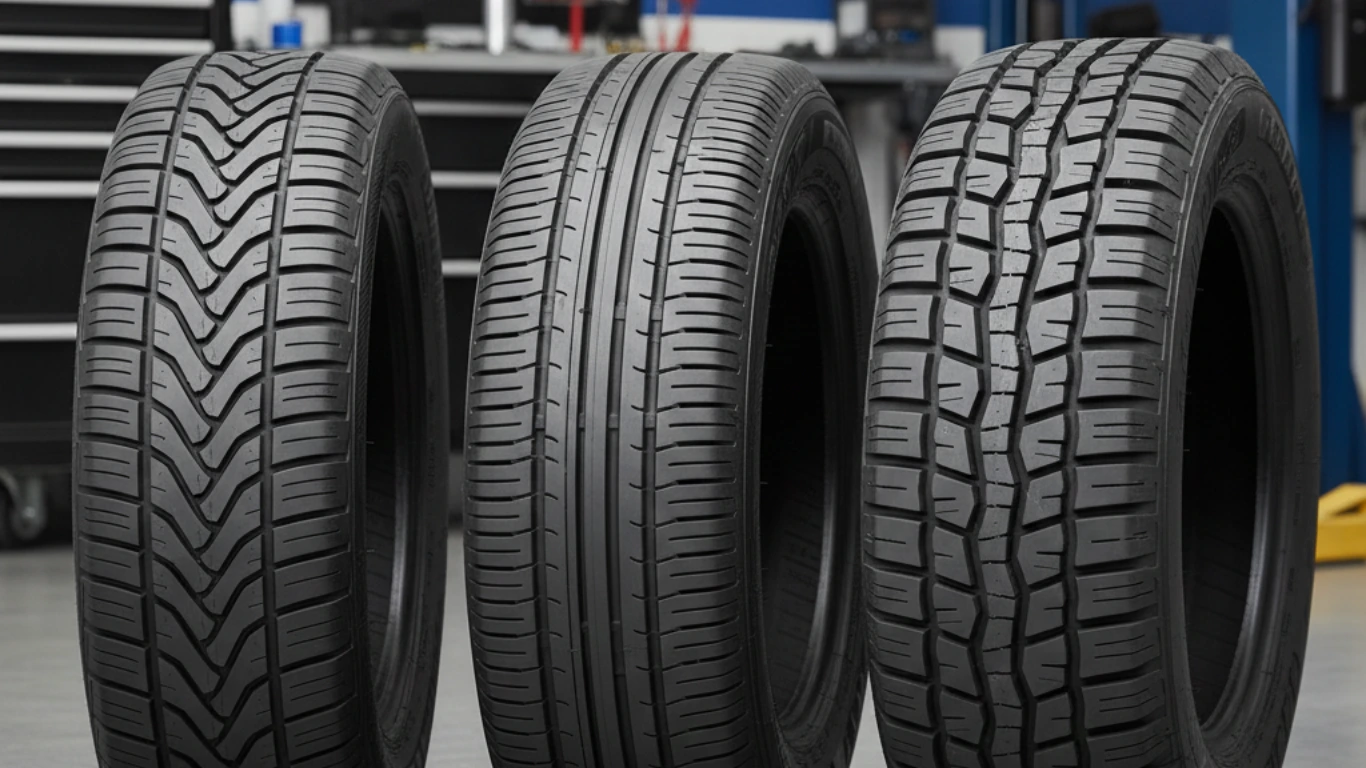
A repeated pattern of identical blocks and ribs across the tyre.
Best For
- Everyday city/highway driving
- Small cars, sedans, hatchbacks
- Drivers who want low noise and long tyre life
Benefits
- Quiet and smooth ride
- Long-lasting wear
- Lower cost
- Can be rotated easily in multiple patterns
2. Asymmetrical Tread Pattern
What It Looks Like
The inner and outer halves of the tyre have different designs.
- Inner section: deeper grooves for water evacuation
- Outer section: larger blocks for stability during cornering
Best For
- High-speed highway driving
- Sports cars, luxury sedans, SUVs
- All-weather conditions
Benefits
- Great balance of wet and dry performance
- Enhanced cornering grip
- Better stability at high speed
3. Directional (Unidirectional) Tread Pattern
What It Looks Like
A V-shaped or arrow-like pattern, designed to rotate in one direction only.
Best For
- Wet conditions
- High-speed driving
- Performance cars
- Driving in areas with heavy rain
Benefits
- Exceptional water evacuation
- Reduced risk of hydroplaning
- Strong traction on wet roads
- Good performance in light snow
4. Off-Road / All-Terrain Tread Pattern
What It Looks Like
Large, aggressive tread blocks with deep grooves and wider gaps.
Best For
- 4x4s, SUVs, Utes
- Dirt, mud, gravel, sand
- Rural or adventure driving
Benefits
- Superior grip on off-road surfaces
- Strong sidewalls to resist punctures
- Improved traction in mud and rough terrain
Which Tyre Tread Pattern Should You Choose?
If you drive mainly in the city or on highways, a symmetrical tread pattern is usually the best option because it offers a smooth, quiet ride and long tyre life. For drivers who enjoy sporty or performance-oriented driving, asymmetrical or directional tread patterns provide better grip, handling, and cornering stability. If you often drive in rainy or wet conditions, directional tyres are ideal because they evacuate water quickly and reduce hydroplaning. For off-road adventures or mixed terrain driving, all-terrain or mud-terrain tyres offer the traction and durability you need. If you want a balance of performance and comfort, an asymmetrical tread pattern is the best all-round choice.
- Better fuel efficiency
- Increased safety
- Longer tyre lifespan
- Better control and handling
If you’re unsure, Momentum Tyre Services can inspect your car, understand your driving habits, and recommend the best tyre design for your needs.
Conclusion
Tyre tread patterns are not just a design—they determine how safely and efficiently your vehicle performs. Whether you drive daily in the city, enjoy spirited driving, or take your 4×4 off-road, choosing the right tread pattern can transform your driving experience.
For expert recommendations and professional tyre services, trust Momentum Tyre Services—your local specialists in tyres, wheel alignment, balancing, and more.
FAQs
1. What is the purpose of tyre tread patterns?
Tyre tread patterns help provide traction, channel water away, reduce hydroplaning, and offer stability during braking and cornering.
2. Which tyre tread pattern is best for highway driving?
Symmetrical or asymmetrical tread patterns are best for highways because they offer low noise, comfort, and balanced performance.
3. Are directional tyres good for wet roads?
Yes. Directional tyres excel in wet conditions because their V-shaped design quickly pushes water away from the tyre’s surface.
4. What tread pattern is best for off-road driving?
All-terrain or mud-terrain tread patterns are best for off-road driving due to their deeper grooves and stronger traction.
5. Can tyre tread patterns improve fuel efficiency?
Yes. The right tread pattern reduces rolling resistance, helping improve fuel economy, especially in symmetrical and asymmetrical designs.

